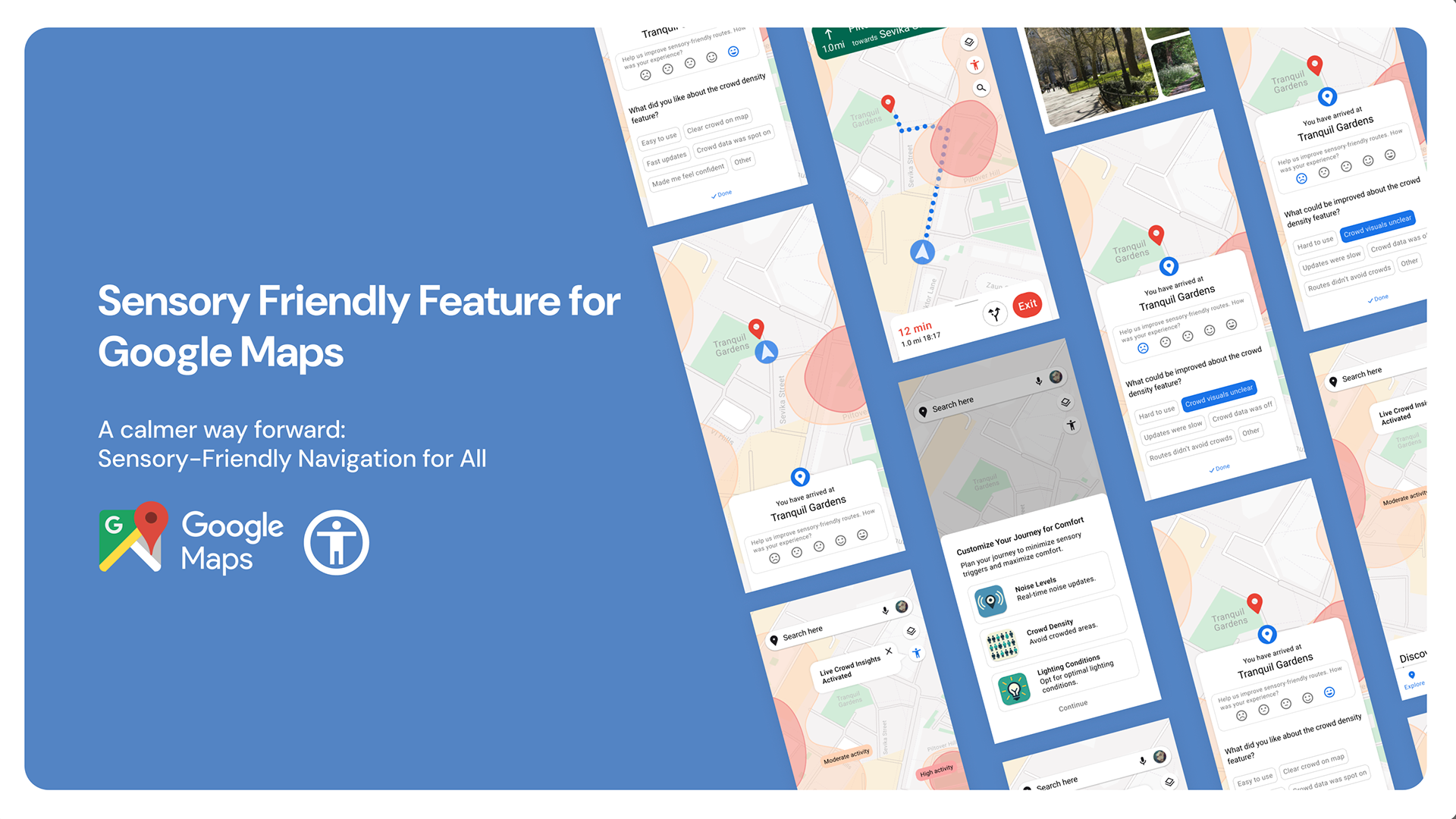
Explore how navigation tools could support people before they arrive, not just get them from A to B.
The concept asks a simple question: what if Google Maps could help you understand how loud, crowded, or unpredictable a place might feel?
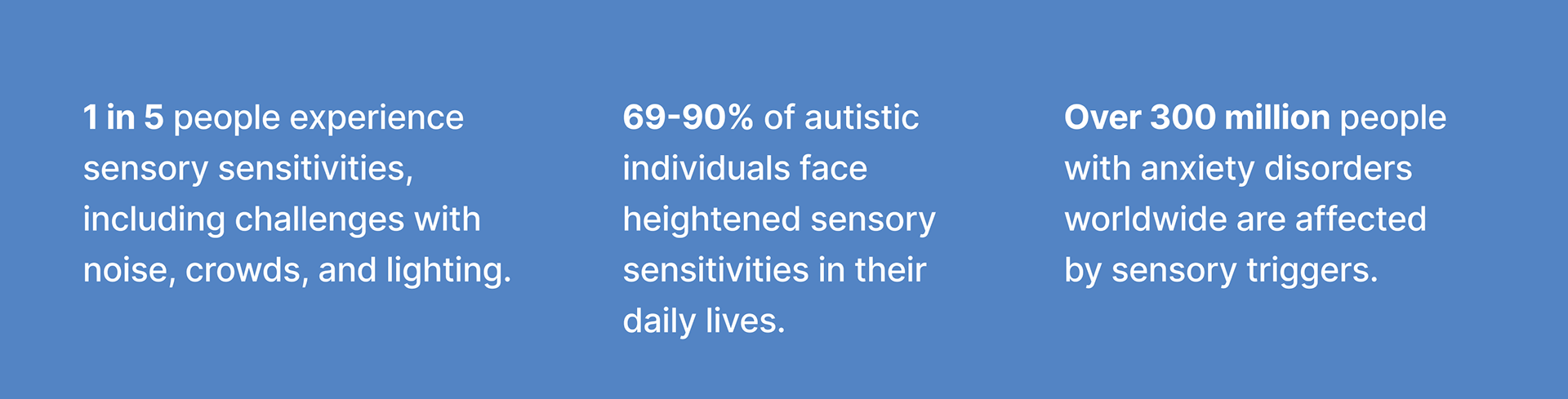
People navigating sensory overload are often forced to make decisions without the context they actually need. A place might be close by and highly rated, but still feel impossible to enter once noise, crowding, and unpredictability hit.
The problem wasn't navigation itself. It was the lack of sensory context before arrival.
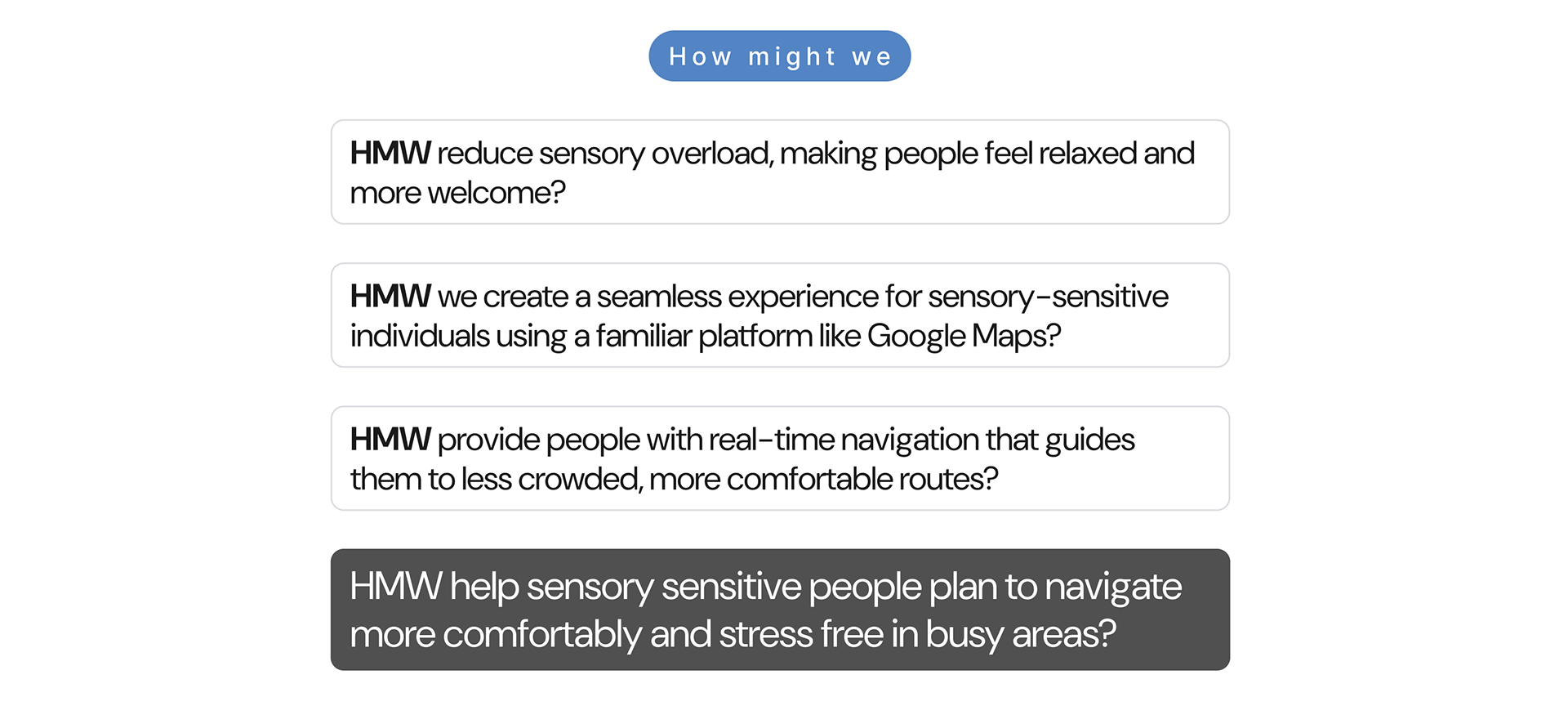
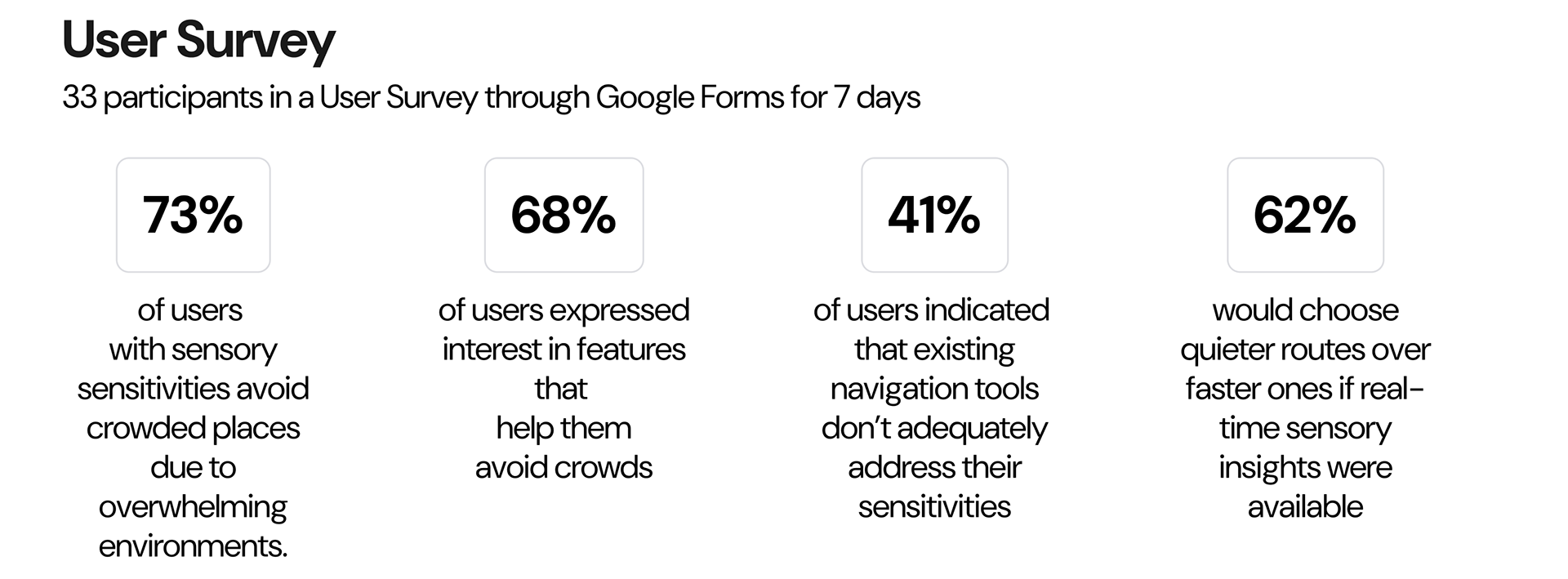
I ran a user survey with 33 participants over 7 days, then conducted in-depth interviews mapped through affinity diagrams. The data was consistent: people weren't asking for a different app. They were asking for the app they already trusted to understand them better.
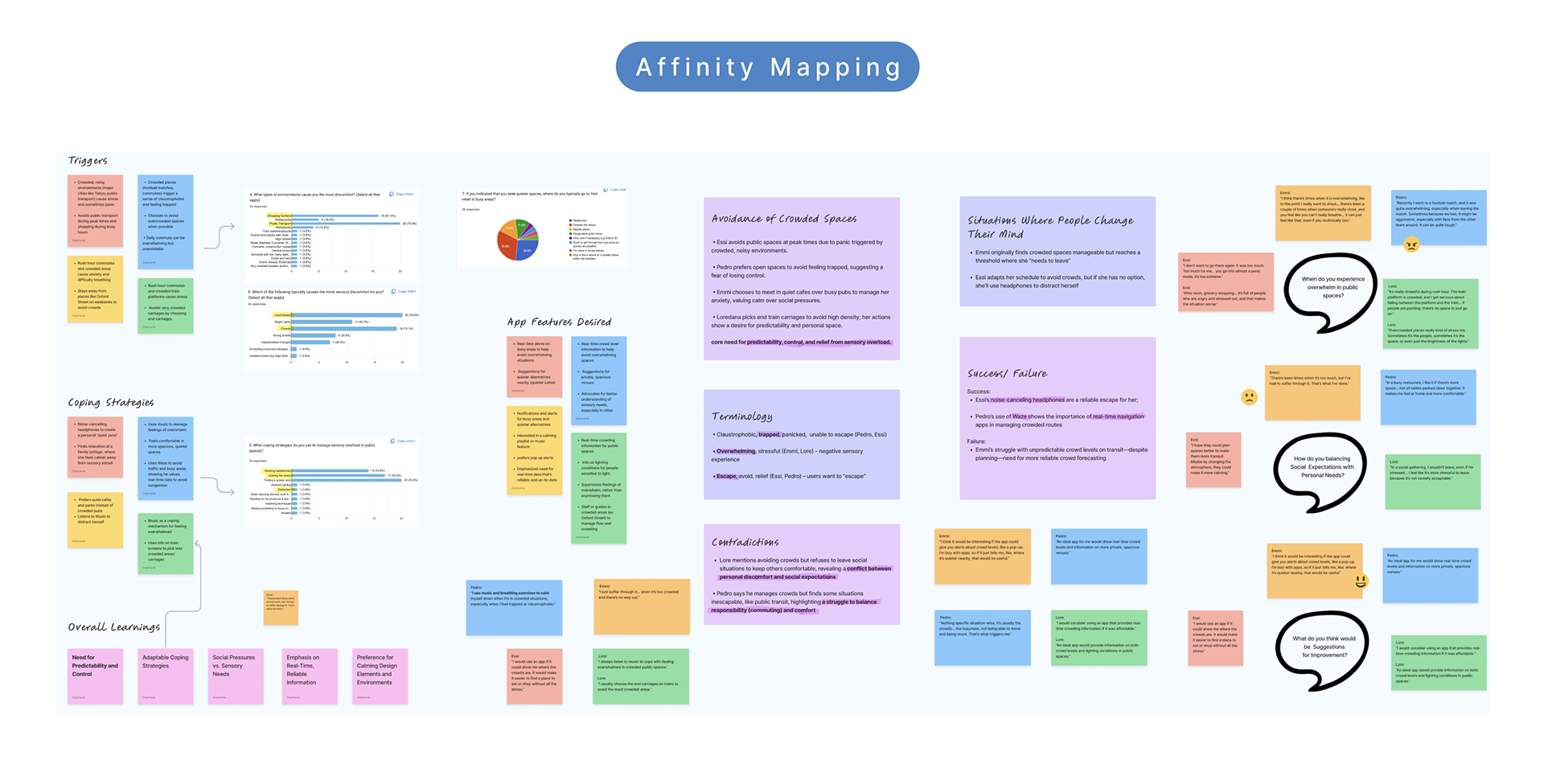
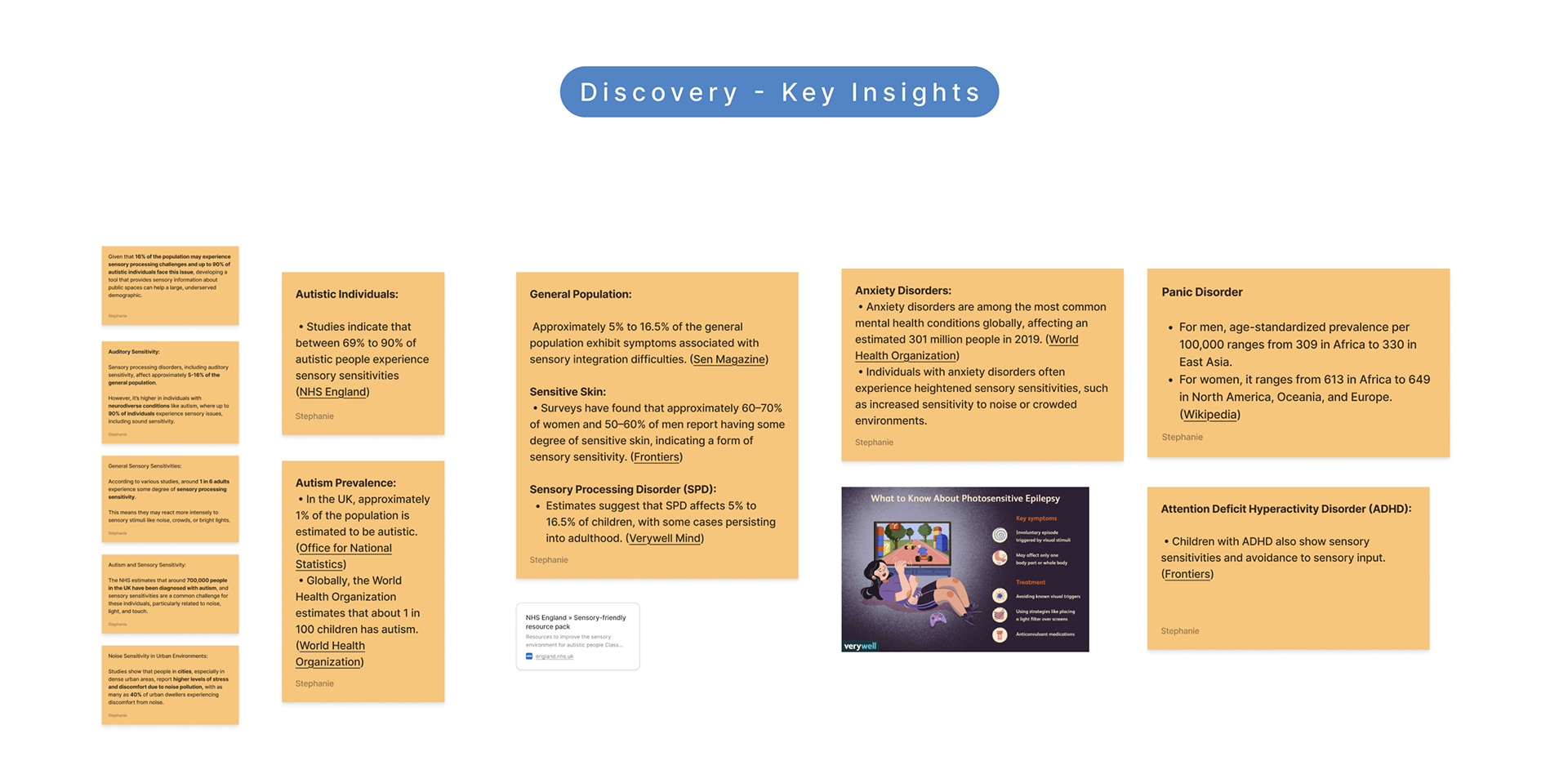
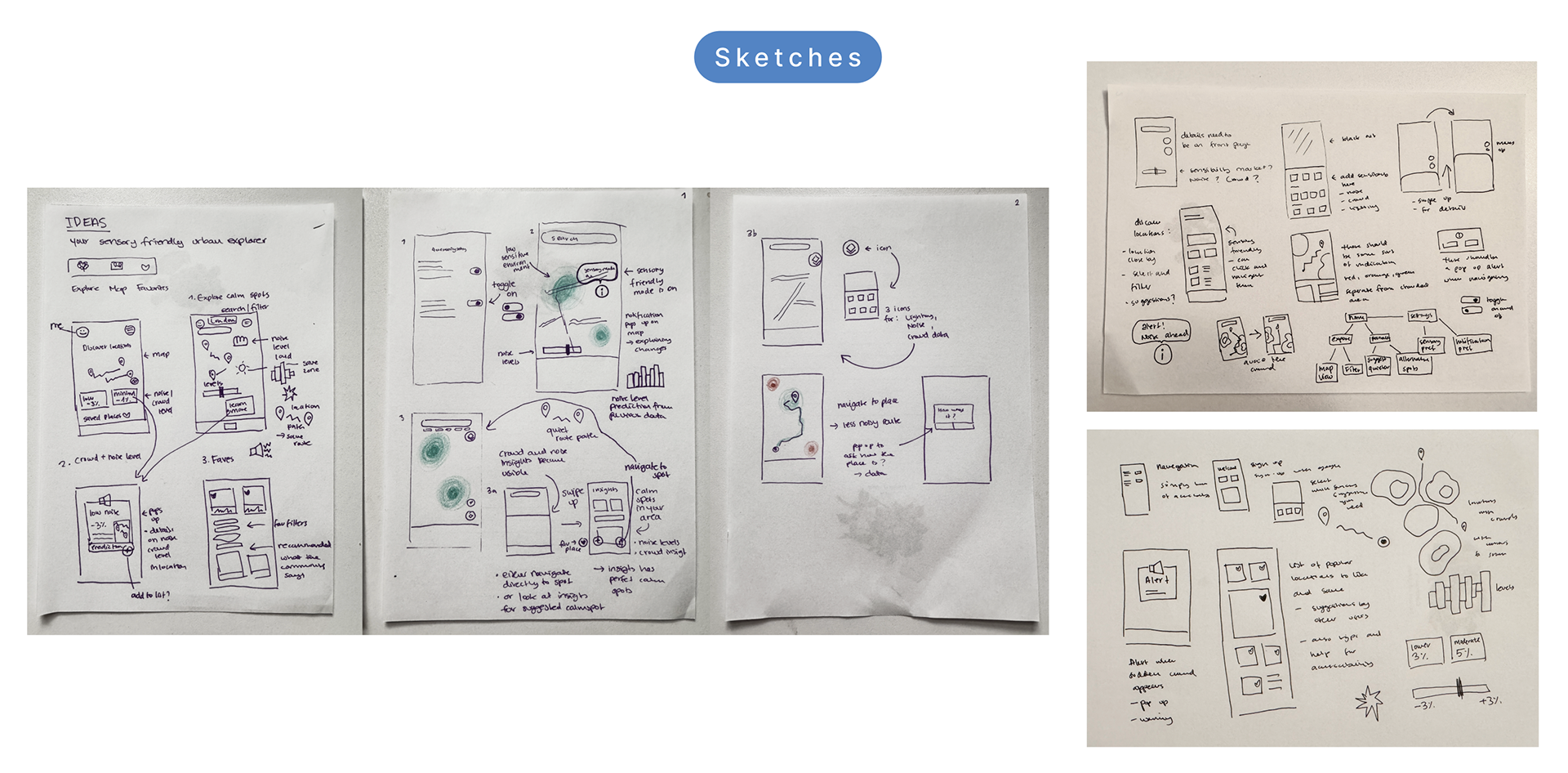
I used survey data, interviews, affinity mapping, wireframes, and high-fidelity prototyping to design a feature that helps people anticipate the sensory feel of a place.
The challenge was to surface that information in a way that felt useful, calm, and native to Google Maps.
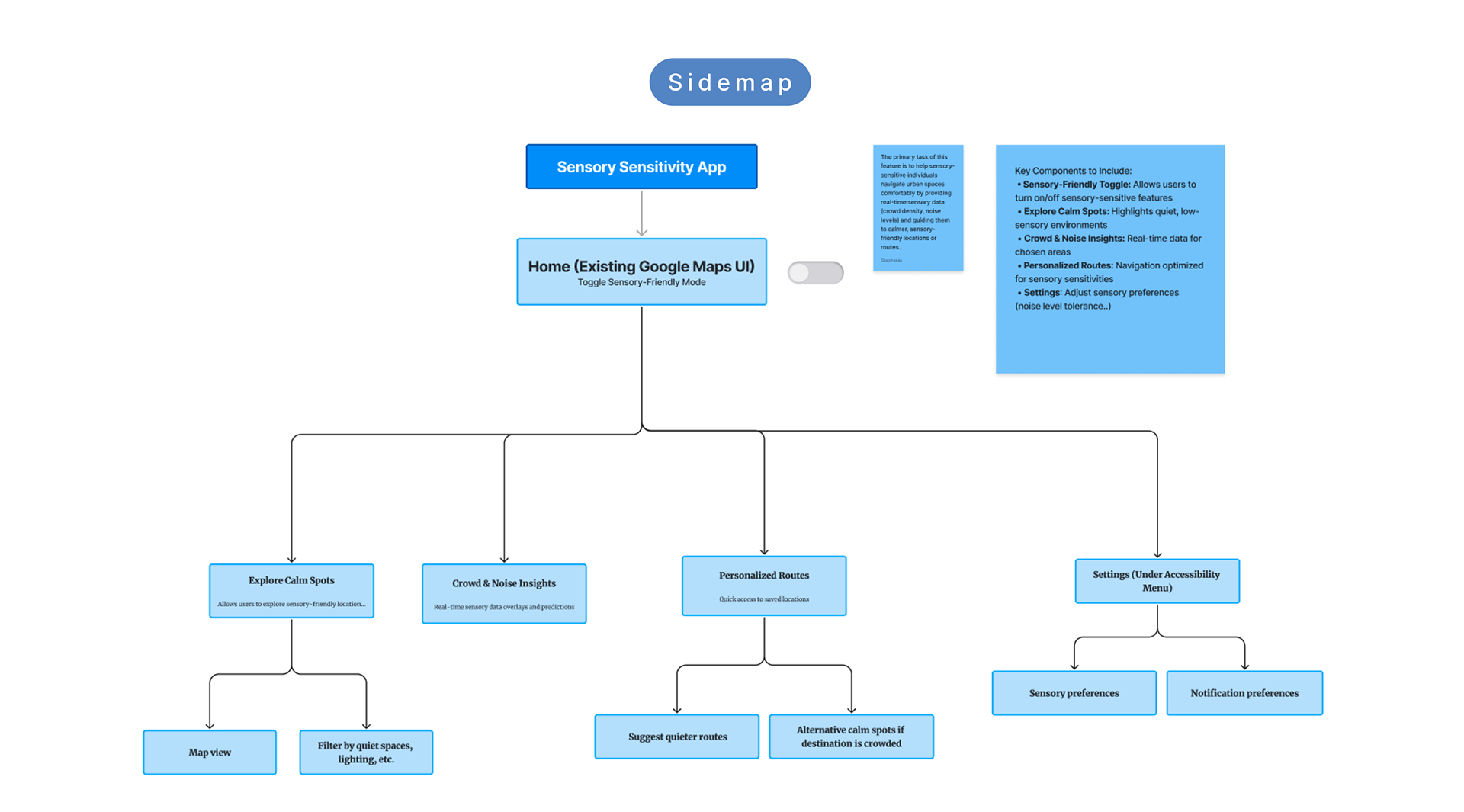
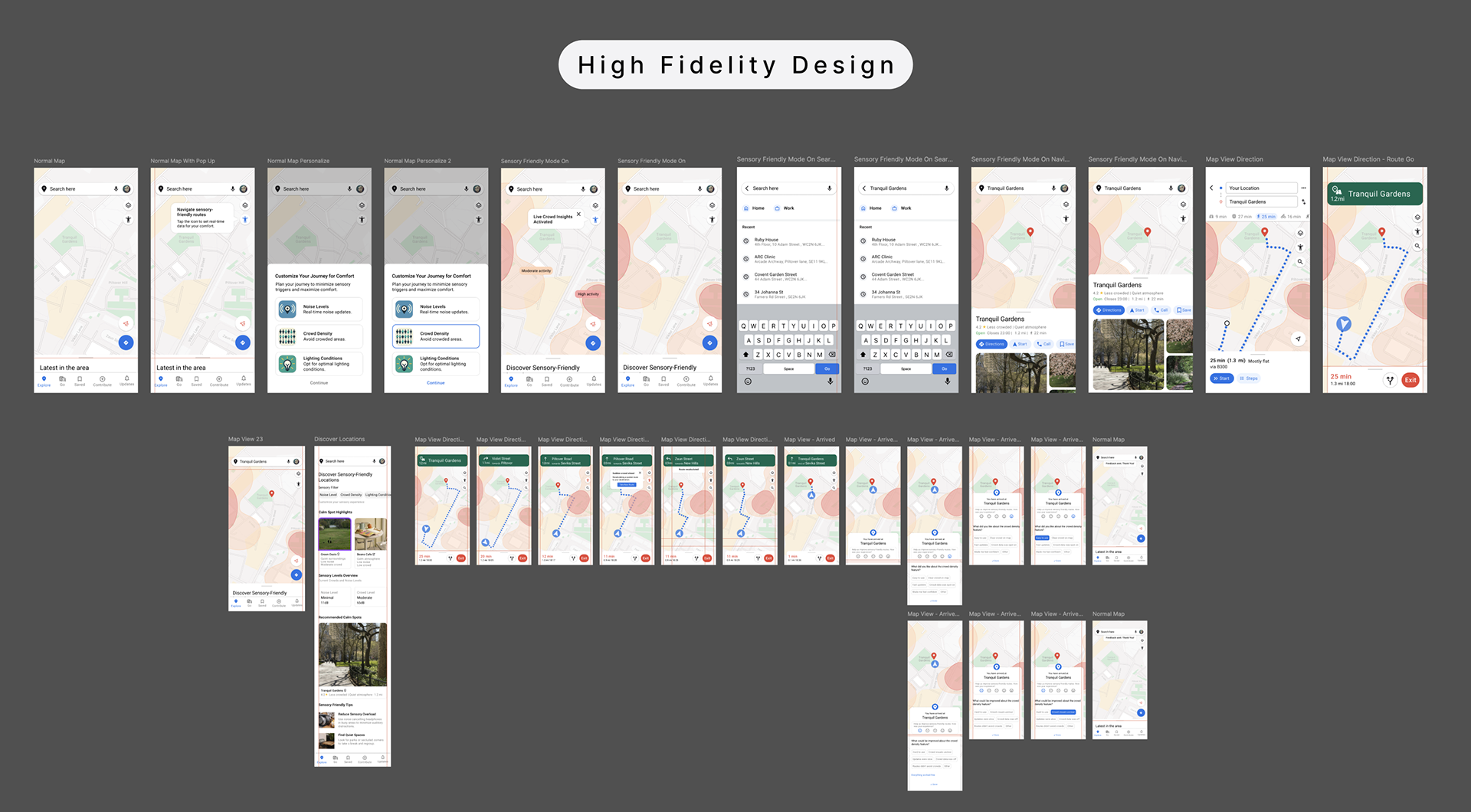
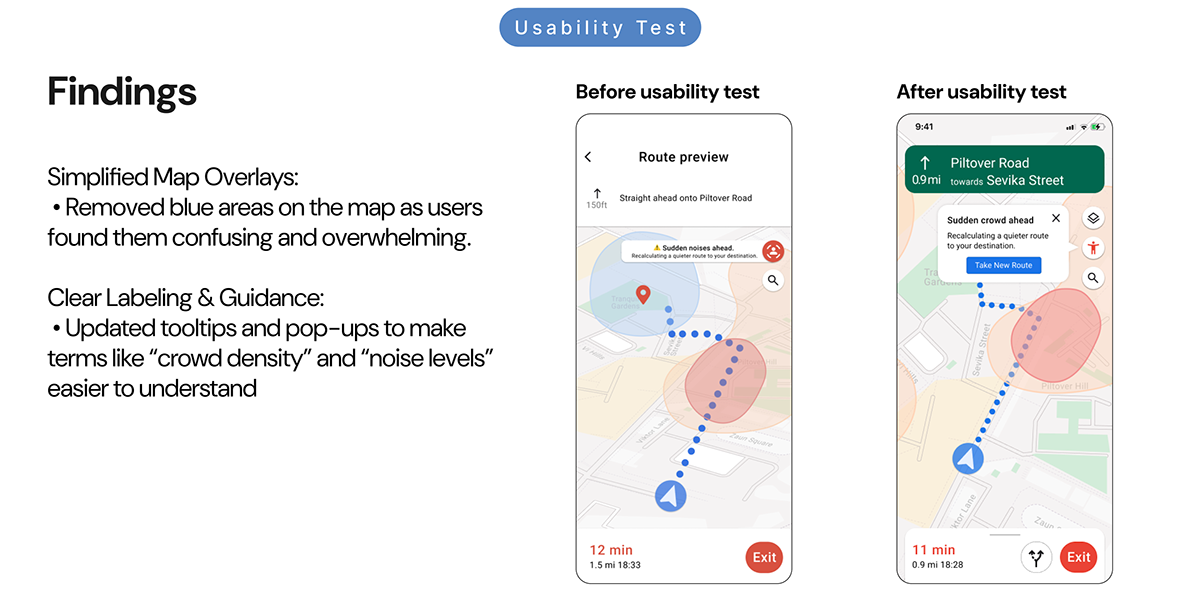
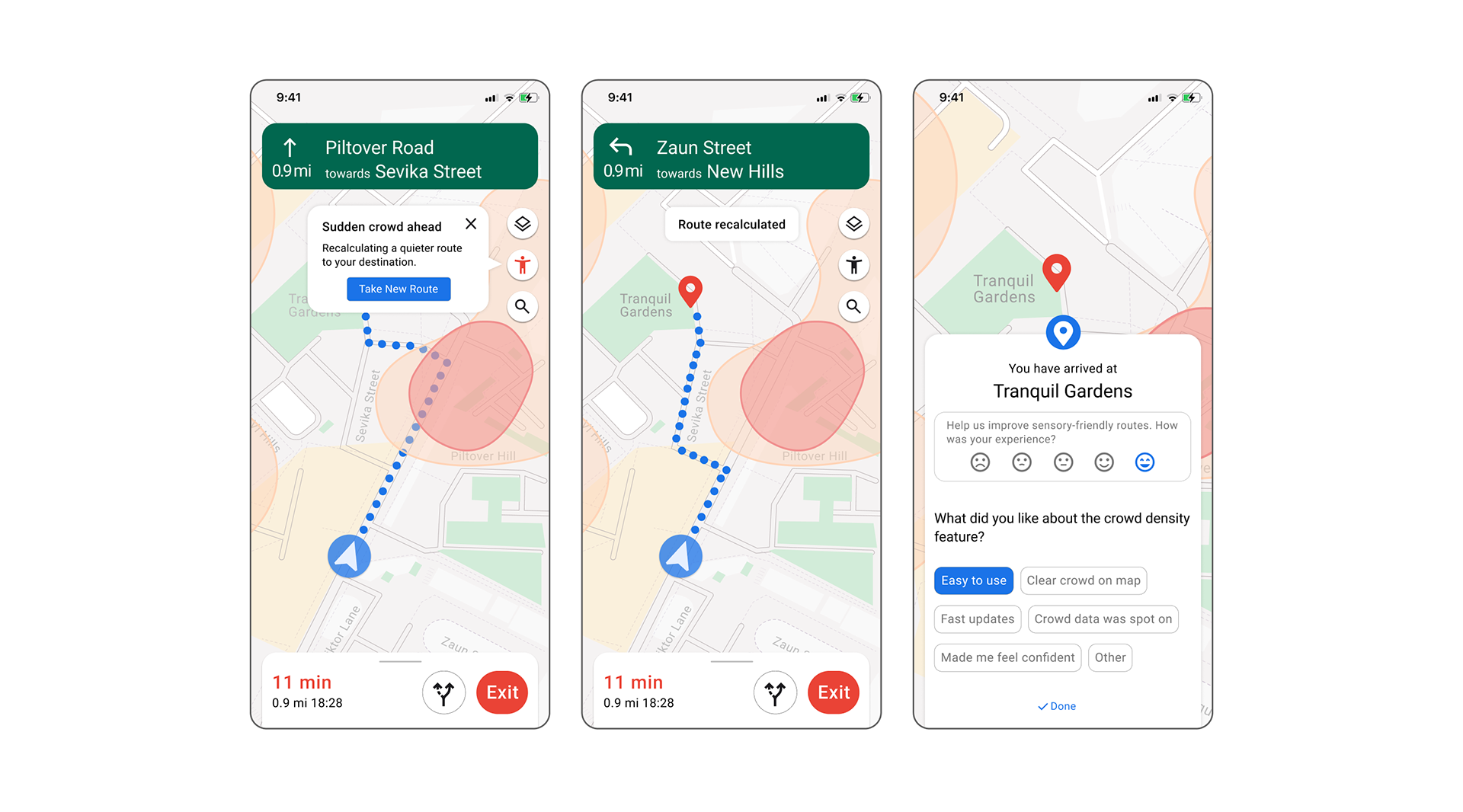
The final concept shows how accessibility can become part of everyday decision-making, helping people feel more confident before entering loud, crowded, or unpredictable spaces.
Designing for sensory needs is not a niche exercise. It improves clarity, comfort, and trust for everyone using the product.